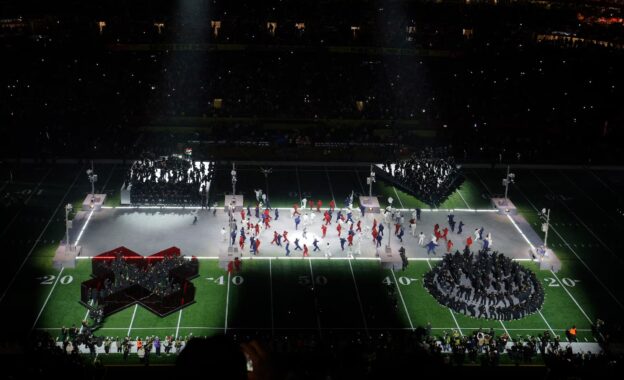
Yasmin Madadi – Every February, the world stops for approximately thirteen minutes to witness a cultural phenomenon: the Super Bowl Halftime Show (“Halftime Show”). From Michael Jackson’s iconic 1993 performance to Bad Bunny’s 2026 appearance, this stage has evolved into the most coveted stage in the music industry. However, beneath all the flashing lights and glamour lies a complex web of labor laws, union regulations, and unconventional contractual agreements. While normal fans simply see their favorite artists put on a show, financial experts see a unique business model that challenges traditional notions of employment.
- Understanding the Headliner’s Contract
One of the most frequently asked questions about the Super Bowl is: How much did the halftime performer get paid? The answer, from a strictly salary-based perspective, is usually zero. The NFL essentially does not pay a traditional performance fee to its headlining artists. This “no-pay” policy is allowed as it is not a violation of labor laws because the halftime show is legally structured as a union-covered event based on publicity, not a standard employment contract.
While there is no salary paid to the artist for their time, the league makes a massive financial commitment regarding production. The NFL and its sponsors cover all production costs, which include the technical crew, security, staging, lighting, and travel for the artist’s entourage. These budgets are astronomical––often exceeding ten or fifteen million dollars––for just thirteen minutes of airtime. The artist is essentially exchanging their performance for a massive, league-funded marketing campaign.
- The Role of Labor Unions: SAG-AFTRA and Minimum Wage
Even in a “no-pay” environment, the NFL must navigate the strict requirements of entertainment unions. Because the Halftime Show is a televised production, it falls under the jurisdiction of SAG-AFTRA (The Screen Actors Guild-American Federation of Television and Radio Artists). SAG-AFTRA covers a wide range of media professionals, including actors, dancers, singers, voiceover artists, and broadcast journalists, particularly in television, film, and recorded media. The Halftime Show is covered under a SAG-AFTRA agreement that ensures professional dancers and performers are paid, often with minimum fees known as union scale.
For a headliner like Bad Bunny, while there is no multi-million dollar performance fee, there is still a daily rate of around one thousand dollars paid to satisfy union requirements for rehearsals and the performance day itself. This ensures that the NFL does not violate any labor regulations that mandate compensation for work performed on a professional set.
- The Volunteer Controversy
In recent years, the most significant legal and ethical controversy has surrounded the volunteers used to fill the stage. For decades, the NFL has relied on hundreds of unpaid workers, often local dance students or enthusiasts, to act as “field cast” members. Historically, these individuals were required to attend dozens of hours of rehearsals without any financial compensation in exchange for the once-in-a-lifetime experience of performing at the Super Bowl. This practice sparked major legal scrutiny. A significant turning point arrived during The Weekend’s 2021 Halftime Show. The production came under fire when it was revealed that half the dance troupe was paid, while the other half worked for free. Most of these ‘volunteers’ didn’t realize they were performing the same roles as paid professionals or that they had a right to union representation. This controversy prompted SAG-AFTRA to step in and have serious discussions with the show’s producers, mandating that Halftime Show dancers and other staff were paid. Today, the league mandates that all professional dancers be paid for their time, including rehearsals, marking a major shift in how the production handles its labor force.
- The Power of the Super Bowl
If there is no direct payment, why is there a line of stars eager to perform? The answer lies in the branding value generated by the event. Following the thirteen-minute performance, artists traditionally experience a massive surge in music sales, streaming numbers, and ticket demand.
Past performers such as Shakira, Justin Timberlake, and Bruno Mars, saw boosts in their music streams or sales after performing. Evidently, the Halftime Show is not just like any other gig, it offers the performer worldwide exposure and immense value. Michael Jackson’s 1993 performance set the precedent for this, proving that a well-executed show could revitalize a career and sell millions of albums worldwide. Modern artists like Bad Bunny use the platform to launch world tours and secure lucrative endorsement deals, far exceeding any flat fee the NFL could provide.
- Conclusion
The Halftime Show is a fascinating case study in how labor laws and marketing intersect in the digital age. In the Halftime Show, the league provides the infrastructure, and the artists provide the content.
While the legal battles over volunteer pay have led to fairer conditions for “field cast” members, the core financial structure remains unchanged: traditional salary is replaced with compensation in the form of exposure. As long as the Super Bowl remains the most-watched event on television, artists will likely continue to sign these no-fee contracts, knowing that thirteen minutes on the NFL stage is worth more than any traditional salary could offer. For the performers, this is a small price to pay for a permanent place in music history.
